My AI Agent is Now My Personal CFO: A Journey from Chatbot to Financial Strategist
For a long time, I viewed my AI agents through a narrow lens: they were excellent coding partners, debugging assistants, and automation scriptwriters. But recently, I reached a new milestone. I’ve successfully transitioned my agent from a "Code Assistant" to a Personal CFO.
Here is the story of how it happened.
1. The Foundation: A Self-Hosted Financial Stack
To make this work, I didn't rely on opaque third-party apps. I built a transparent, API-driven stack in my HomeLab:
- OpenClaw: The brain. It’s an agentic framework that can run locally and interact with my environment.
- Actual Budget: The database. A powerful, local-first budgeting tool where all my transactions live. I’ve previously written about why I use Actual Budget and how to set it up effectively.
- BookStack: The repository. This serves as my "Family Wiki," where technical docs and now, financial reports, are permanently stored.
By connecting these three via their respective APIs, I created a loop where the AI could read raw data and write polished intelligence.
2. The Training Phase: "Teach, Don't Just Tell"
The breakthrough started in a Telegram chat. Instead of asking generic questions, I began teaching the agent the nuances of my portfolio.
I walked it through my accounts—let's call them Vanguard for my group plans and Fidelity for my personal stocks. I explained the logic of "Employer Matching" rules.
Through a series of step-by-step prompts, I taught the agent how to:
- Authenticate: Use the Actual Budget API to fetch monthly balances.
- Sanitize: Identify internal transfers (like moving cash between accounts) to avoid double-counting gains.
- Calculate ROI: Distinguish between new capital injections and actual market appreciation to find the true Return on Investment.
3. Iteration: Visualizing Wealth Growth
The first few attempts were just simple text replies in Telegram. Useful, but fleeting. We decided to go bigger.
We moved to a CSV-first architecture. I had the agent maintain a wealth_ledger.csv on the server. Every time I sent a screenshot or a balance update, the agent would update the ledger and then—this is the cool part—use the BookStack API to refresh a beautiful "Retirement Roadmap" dashboard.
To make the data truly "pop," I instructed the agent to generate Stacked Area Charts directly inside the Wiki pages. These charts provide an instant visual of how different asset classes are contributing to the total net worth over time.
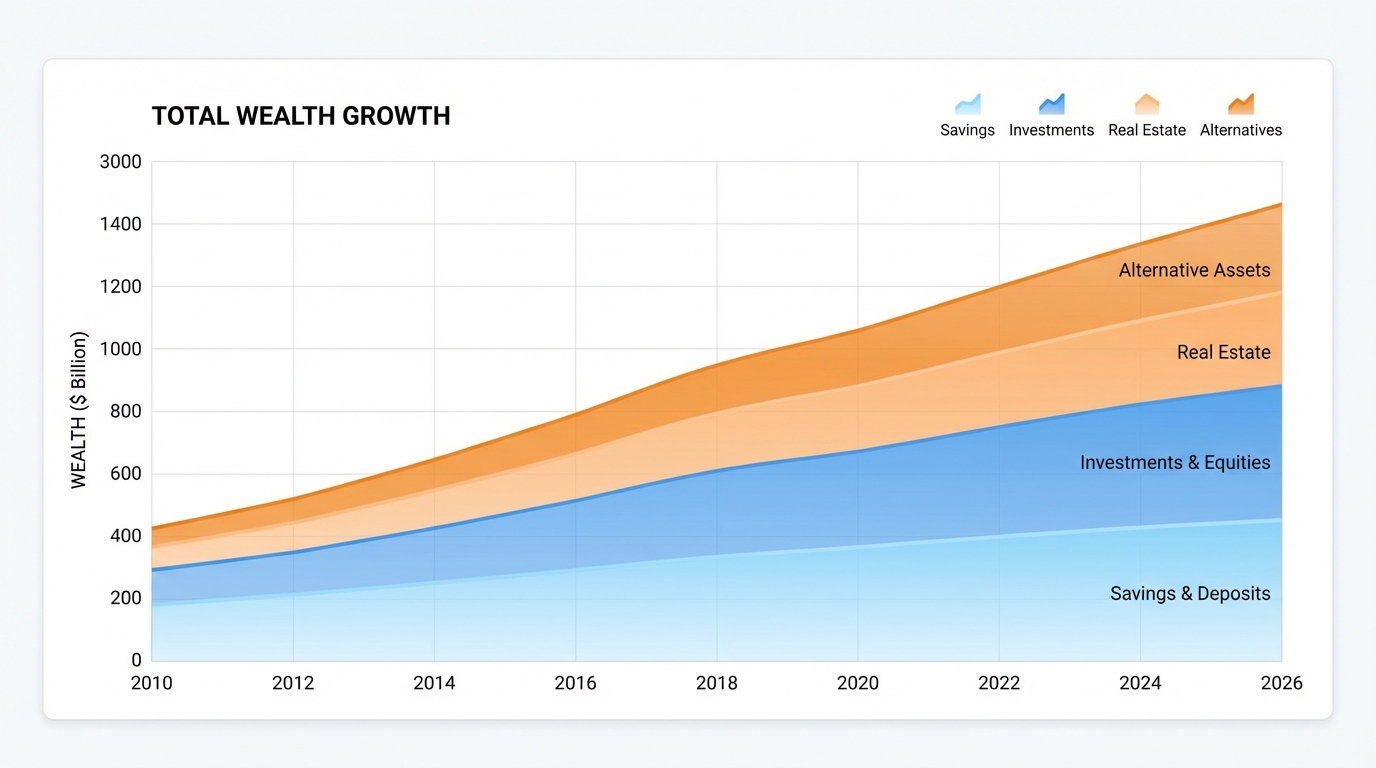
This isn't a one-time manually triggered event. I configured Cron jobs to ensure this financial auditing and reporting happen automatically every month (or quarter), giving me the peace of mind that my dashboard is always up to date without me lifting a finger.
Whenever the math got too complex—like projecting a 20-year compound interest roadmap—my main agent would spawn a specialized "Actuary Sub-agent." This dedicated math expert would run the simulations and report back to the main agent, ensuring the numbers in the Wiki were rock-solid.
4. Real-World Impact: The Education Fund Pivot
The true power of an "Active CFO" became clear during a real-life scenario involving my family's education fund.
While we were chatting about ROI, I mentioned that we need to withdraw a significant amount of education capital in just 6 months. My agent immediately analyzed the current portfolio—which was set to a high-growth, high-risk level—and gave me a warning: "Since you need this cash in 6 months, volatility is now your enemy, not your friend."
Right then and there, the agent suggested a specific lower-risk policy. Since it had the context and the tools, it prepared the logic to shift the strategy toward capital preservation, ensuring the funds would be there, rain or shine.
Conclusion
Turning an AI into a CFO is about more than just saving time. Today, I've achieved two monumental tasks: fully automated, recurring financial auditing and a self-updating internal Wiki that serves as a permanent reference for my family. This level of personalized, data-driven strategy is something that previously would have cost a significant amount of money and hundreds of manual hours to achieve—if it was possible at all.
My agent isn't just a chatbot anymore; it's a living, breathing financial partner guarding our future.